
The Indian Canvas #02: A mother fainted at home while her son was far away. What would a home-safety visit change?
A woman of 63 fainted at home in India, hit her head and needed 7 stitches. Her son, living far away, asked Reddit what works. I first read that thread as a story about bathrooms. It is a story about distance and about the ten minutes she spent on the floor. The idea it supports is narrower than a bathroom business: a home-safety visit sold to the children, aimed at the parents who are most at risk.
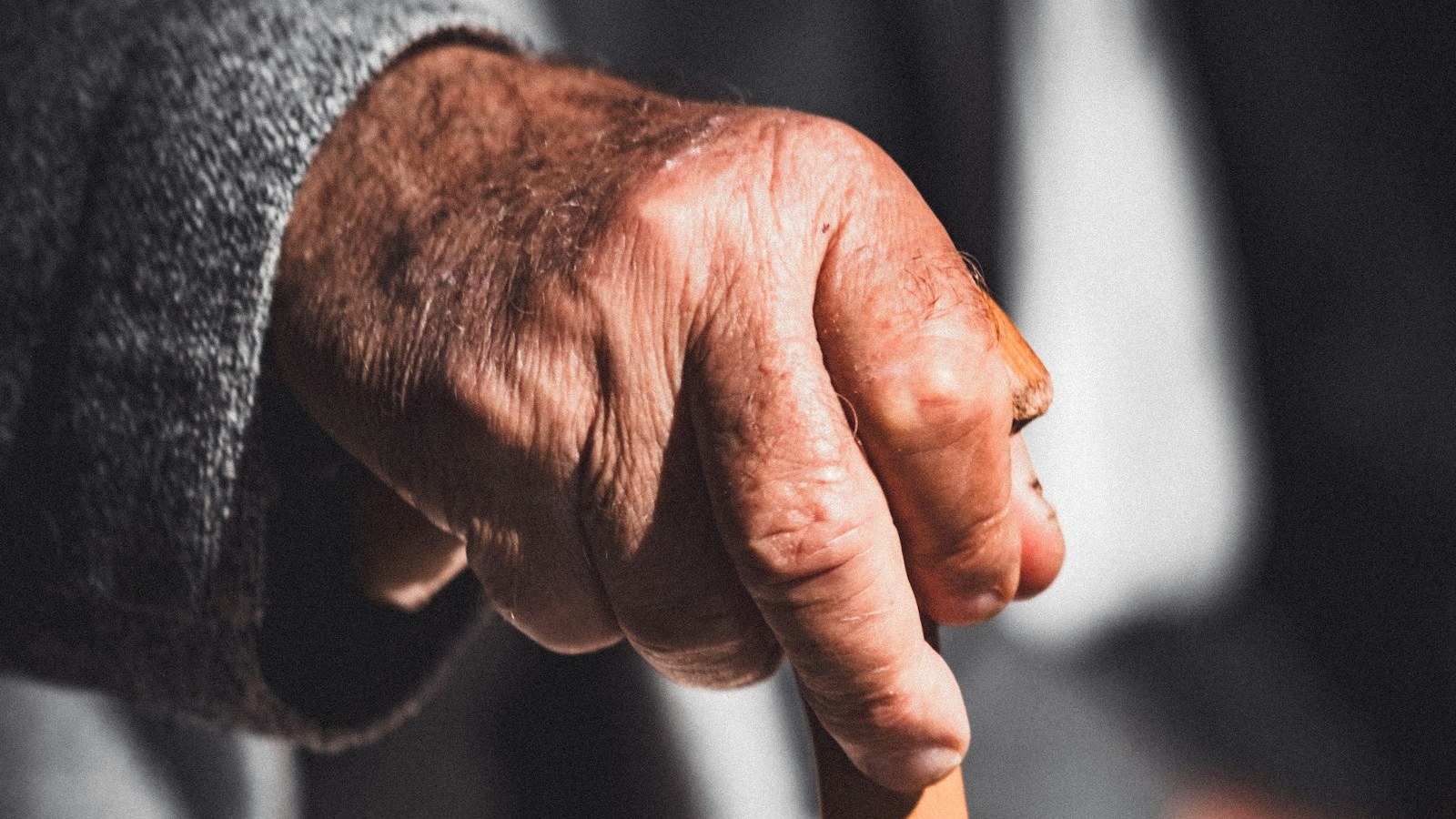
She fainted, and by his account it took ten minutes to reach anyone
The post went up on r/india on 4 October 2025 and drew 87 points and 51 comments. The writer, 27, has parents in another state. His mother fainted, hit her head and needed 7 stitches. By his account she lay on the floor for about ten minutes before she could get up and phone an aunt nearby. He found out only after she was back from hospital. He had already put cameras in the house. He asked about alert services, smart-home gear, low-tech changes, and how to talk his parents into any of it without making them feel watched.
My first version of this article said the advice was all physical and nobody mentioned an app. That was wrong. The top replies were a smartwatch with fall detection, motion lights, a smart speaker, a full-time helper and, from one person, a camera with a call button. Grab rails came up once, in a single comment about bathrooms. The thread was not about bathrooms, and she did not fall in one.
It matters for the idea. Fainting has medical causes that a doctor has to look at, and no rail fixes that. What a house can change is what happens next: how hard the floor is, whether she can reach a phone, and how quickly someone finds out.
What the evidence says a home visit can do
A 2022 study in BMC Geriatrics, using the first wave of the Longitudinal Ageing Study in India (collected 2017 to 19), found that 12.5% of 28,567 people aged 60 and over reported a fall. It was higher among women, 13.6% against 11.4% for men. That is one survey from several years ago, so I use it to say falls are common and not to size anything. The paper is here.
The more useful result is from Cochrane. Its 2023 review of fall-hazard reduction at home pooled 14 studies and 5,830 people. Assessing hazards and fixing them probably cuts the rate of falls by 26%, and by 38% for people selected because they were already at higher risk. For people not selected that way, the review found no reduction in the number of people who fall. I did not check where those trials were run, and none of them is an Indian service.
So the product is not grab bars. It is deciding who is at higher risk and what in their home needs to change.
Bathroom safety is already on sale in India, in two forms
This is not an empty space. Mexple's SafeBath calls itself an end-to-end bathroom safety assessment and installation service. It lists grab bars, toilet risers, anti-slip mats, shower stools and motion-sensor lights. Its page now says products will be live soon after changes to company and bank details, so I cannot confirm that anyone can buy it today, and I could not find prices on it. Wrinkled does design and execution of senior-friendly homes, and its site covers bathrooms, stairs, lighting and entrances. Beyond them there are local contractors, paid helpers, cameras and watches. Both companies' descriptions are their own, and I have not seen results from either.
What one Chinese province pays for
The model I borrowed from is the ageing-in-place retrofit subsidy in China, but it should be named precisely. A 2025 notice from Zhejiang's civil affairs, finance, housing and commerce departments covers five functions: safe toilet and bathing, easier walking indoors, a better home environment, smart monitoring and assistive-device fitting. The province pays 30% of the purchase price, up to 3,000 yuan per item and 20,000 yuan per household. Children or community staff can apply for the parent. Builders have to be qualified and registered on a provincial platform. The scheme ran from 1 January to 31 December 2025.
That is one province, and the notice describes who pays and what is covered, not whether falls dropped. The part I find useful is the bundle. Bathroom work and monitoring sit in the same programme, and the state is the payer.
India has a central scheme, the Rashtriya Vayoshri Yojana, but it supplies physical aids and assisted-living devices such as walking sticks and hearing aids to senior citizens below the poverty line. I did not find a home-retrofit subsidy in it, and I did not search every state. In India, then, the family pays.
The idea I would test
The payer is the adult child who lives elsewhere. That is the Reddit writer's position, and I do not know how typical it is. The missing piece is someone who assesses first, preferably a physiotherapist or occupational therapist, then turns the findings into one short work list: floors, lighting, the bathroom, a way to call for help from every room, and a check that the parents actually use it. A second visit a few months later checks what stuck. The strongest first customers are families that have just had a fall, since that is the higher-risk group where the review found a benefit.
The India adaptation is the referral. Physiotherapists and hospital discharge teams meet these families right after a fall, which is cheaper than advertising to anxious children. As test numbers, not quotes: a Rs 999 assessment credited against an accepted job, and Rs 5,000 to Rs 15,000 for small works after inspection. I have no verified willingness to pay at those levels.
Where it breaks
A fall caused by fainting or medication is a medical problem first. A grab bar fixed to the wrong wall can hurt someone, so qualified inspection, load checks and a handover check are mandatory, and I would promise no reduction in falls. Parents can refuse; the writer himself worried that they would not wear or charge a watch. Flats, rented homes and old walls complicate every job. Mexple, Wrinkled and the local contractor are already there. And the evidence is from trials elsewhere.
The test: ask two physiotherapists to introduce ten consenting families. Sell three paid assessments and two installed jobs in one neighbourhood. Track travel, materials, labour, rework and margin. Build no software until the install process is safe and repeatable. One Reddit thread is a demand signal, not proof of a market.
Sources and photo credits
Thread: r/india, 4 October 2025 (a user's account, not verified). Evidence: BMC Geriatrics, 2022 (LASI wave 1) and Cochrane, reducing fall hazards within the environment, 2023. Government: Zhejiang 2025 home ageing-adaptation notice (Chinese) and Rashtriya Vayoshri Yojana. Companies, with their own claims: Mexple SafeBath and Wrinkled. Photos, both on Unsplash and neither page stating a location: cover, a walk-in shower by Lisa Anna; top of article, elderly hand gripping a decorated wooden walking stick by Aysegul Aytoren. This is a research view, not medical or safety advice.
Responses
No responses yet - yours could be the first.
Get the notes
Occasional emails about what I'm building, what worked, and what broke.